
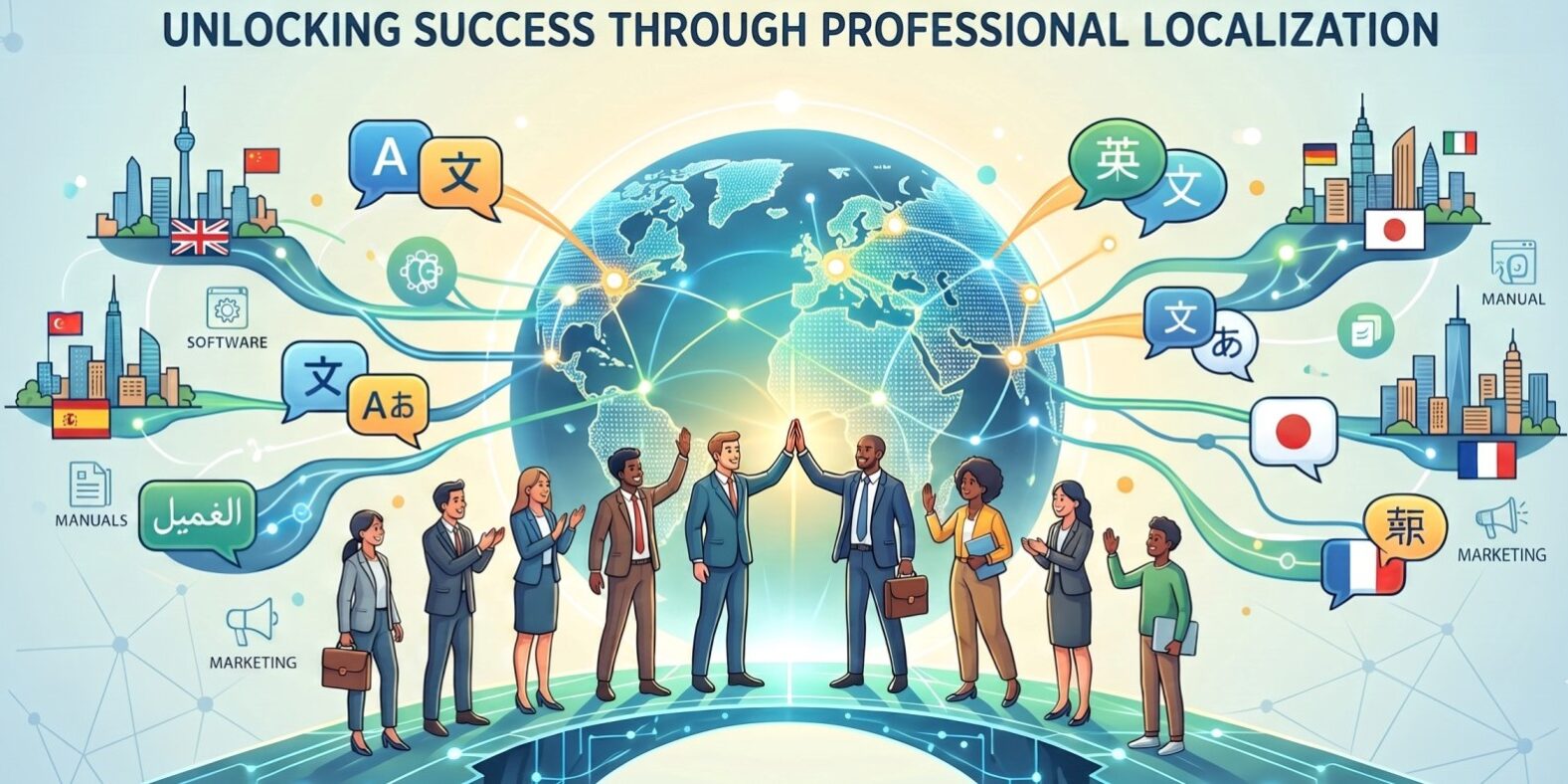
Expanding Globally?
Don’t Let Language Become Your Biggest Barrier
Expanding into international markets is an exciting milestone for any business. Whether you are launching a software application, exporting manufactured products, introducing medical devices, or marketing services across borders, global expansion opens the door to new customers and increased revenue.
However, many organizations focus heavily on product development, logistics, marketing, and sales while overlooking one of the most important success factors – localization.
Customers do not simply buy products; they buy experiences they understand and trust. If your website, software, manuals, marketing campaigns, or legal documents are not adapted to the language, culture, and regulatory expectations of your target market, even an excellent product can struggle to gain acceptance.
At Vie Support Language Services Pvt. Ltd., we have spent over 18 years helping businesses communicate effectively across global markets. Working with organizations in manufacturing, healthcare, technology, finance, legal, education, and media has shown us that successful international expansion depends on much more than accurate translation—it requires a strategic localization approach.
In this article, we explore the hidden localization risks businesses often overlook and explain how professional language services can support successful international growth.
What Is Localization?
Many people use the terms translation and localization interchangeably, but they serve different purposes.
Translation focuses on converting text from one language to another while preserving its meaning.
Localization goes much further. It adapts your content to suit the language, culture, legal requirements, user expectations, and communication style of a specific market.
Localization may include:
- Website localization
- Software and mobile application localization
- Marketing material adaptation
- Product manuals
- Technical documentation
- Multimedia content
- Legal agreements
- Packaging
- User interfaces
- Training materials
The goal is simple: make customers feel that your product was created specifically for their market.
Why Localization Matters More Than Ever
Today’s customers expect businesses to communicate naturally in their own language.
Poorly localized content often appears confusing, unprofessional, or untrustworthy.
On the other hand, professionally localized content helps businesses:
- Build customer confidence
- Increase international sales
- Improve user experience
- Reduce customer support requests
- Strengthen brand credibility
- Enter new markets more quickly
Localization is no longer an optional service – it is a strategic business investment.
Hidden Localization Risks That Can Affect Global Expansion
1. Regulatory and Compliance Risks
Every country has its own legal and regulatory requirements.
Documents such as:
- Product labels
- User manuals
- Safety instructions
- Privacy policies
- Medical information
- Financial disclosures
must comply with local regulations.
A literal translation may be grammatically correct but still fail regulatory review.
For industries such as healthcare, pharmaceuticals, manufacturing, and finance, localization is critical for maintaining compliance.
2. Customer Misunderstanding
Customers should never struggle to understand your product.
Confusing language in:
- Websites
- Software
- User guides
- Product descriptions
- Installation instructions
can result in:
- Increased support tickets
- Poor customer satisfaction
- Lower product adoption
- Higher return rates
Localization ensures communication is clear and intuitive.
3. Brand Reputation Risks
Your brand image extends beyond your logo—it is reflected in every interaction customers have with your content.
A poorly translated marketing campaign or website can damage credibility and spread quickly through social media.
Professional localization helps maintain a consistent and culturally appropriate brand voice across every market.
4. Lost Sales Opportunities
Customers buy from businesses they trust.
If product descriptions, payment instructions, or service information are difficult to understand, many potential buyers abandon the purchase.
Professional localization removes communication barriers and creates a smoother customer journey.
5. Increased Costs After Launch
Fixing localization issues after launch can be expensive.
Businesses may need to update:
- Websites
- Mobile applications
- Software interfaces
- Printed manuals
- Marketing collateral
- Product packaging
Planning localization early helps reduce costly revisions and speeds up market entry.
6. Inconsistent Brand Messaging
Large organizations often have multiple departments creating content.
Without terminology management and centralized language guidelines, messaging can become inconsistent across:
- Marketing
- Sales
- Customer support
- Technical documentation
- Training materials
Consistency strengthens customer confidence and reinforces brand identity.
7. Poor Digital User Experience
Localization also affects usability.
Examples include:
- Currency formats
- Date and time formats
- Units of measurement
- Address structures
- Cultural references
- Reading direction
- Mobile interface layouts
A localized digital experience feels familiar, making it easier for customers to interact with your business.
Industries That Benefit Most from Localization
Professional localization adds value across many industries, particularly those with complex or regulated content.
Manufacturing & Engineering
Technical manuals, operating procedures, maintenance documentation, and safety instructions require precise multilingual communication.
Healthcare & Life Sciences
Medical documentation, clinical research, patient information, and regulatory submissions demand accuracy and compliance.
Software & SaaS
User interfaces, onboarding guides, help centers, and mobile applications must provide a seamless multilingual experience.
Banking & Financial Services
Financial reports, investment documents, compliance materials, and customer communications require consistency and clarity.
E-learning & Education
Training content, assessments, and learning platforms become more engaging and accessible through localization.
AI Has Changed Localization – But Human Expertise Still Matters
Artificial intelligence has transformed the language industry by improving speed and efficiency. It is particularly useful for handling repetitive content and accelerating the initial translation process.
However, AI alone cannot reliably understand:
- Cultural nuances
- Industry-specific terminology
- Regulatory obligations
- Brand voice
- Marketing creativity
- Audience expectations
The strongest results come from combining AI-assisted workflows with experienced human linguists, subject-matter experts, and rigorous quality assurance. This approach delivers the speed businesses need without compromising accuracy or customer trust.
How Vie Support Helps Businesses Expand with Confidence
For more than 18 years, Vie Support Language Services Pvt. Ltd. has supported organizations in communicating effectively across global markets.
Our language solutions include:
- Professional Translation Services
- Website Localization
- Software & App Localization
- Technical Translation
- Multilingual Desktop Publishing (DTP)
- Interpretation Services
- Voice-over & Dubbing
- Subtitling
- Proofreading & Editing
- Content Localization
Why Businesses Choose Vie Support
- ISO 9001:2015 Certified quality processes
- Native-language linguists across 100+ languages
- Industry-specific subject-matter expertise
- Dedicated project managers
- Secure and confidential workflows
- On-time delivery and scalable multilingual support
Whether you are a startup entering your first overseas market or an established enterprise expanding globally, our team helps ensure your message is accurate, culturally relevant, and ready for international audiences.
Best Practices for Successful Global Localization
Before entering a new market, businesses should:
- Define a localization strategy early in the project.
- Use approved multilingual terminology.
- Work with native-language professionals.
- Include independent linguistic review and quality assurance.
- Test localized software and websites.
- Adapt visuals, layouts, and multimedia.
- Verify compliance requirements for each target country.
- Maintain consistency across all customer touchpoints.
Localization should be part of your global business strategy – not an afterthought.
Final Thoughts
International expansion is about more than selling products in new markets – it is about building meaningful relationships with customers who speak different languages, follow different regulations, and have unique cultural expectations.
Professional localization enables businesses to communicate clearly, reduce operational risks, maintain regulatory compliance, and create exceptional customer experiences across global markets.
As organizations continue to expand internationally, investing in a well-planned localization strategy is no longer optional – it is a competitive advantage.
If your business is preparing to enter new markets or strengthen its global presence, partnering with an experienced language service provider can help ensure every message reaches your audience with clarity, accuracy, and confidence.
Ready to Expand Your Business Globally?
Planning multilingual communication for your next international project?
Whether you need translation, localization, multilingual DTP, interpretation, voice-over, subtitling, or content adaptation, the experts at Vie Support Language Services Pvt. Ltd. are ready to help.
Contact us today to discuss your multilingual communication requirements and discover how we can support your global growth with accurate, culturally relevant, and business-focused language solutions.
Ready to build trust in global markets?
Let’s make your brand fluent in opportunity.